
Guidance for Parents and Professionals: Welcome to the www.manosphere.ch platform, an initiative of männer.ch
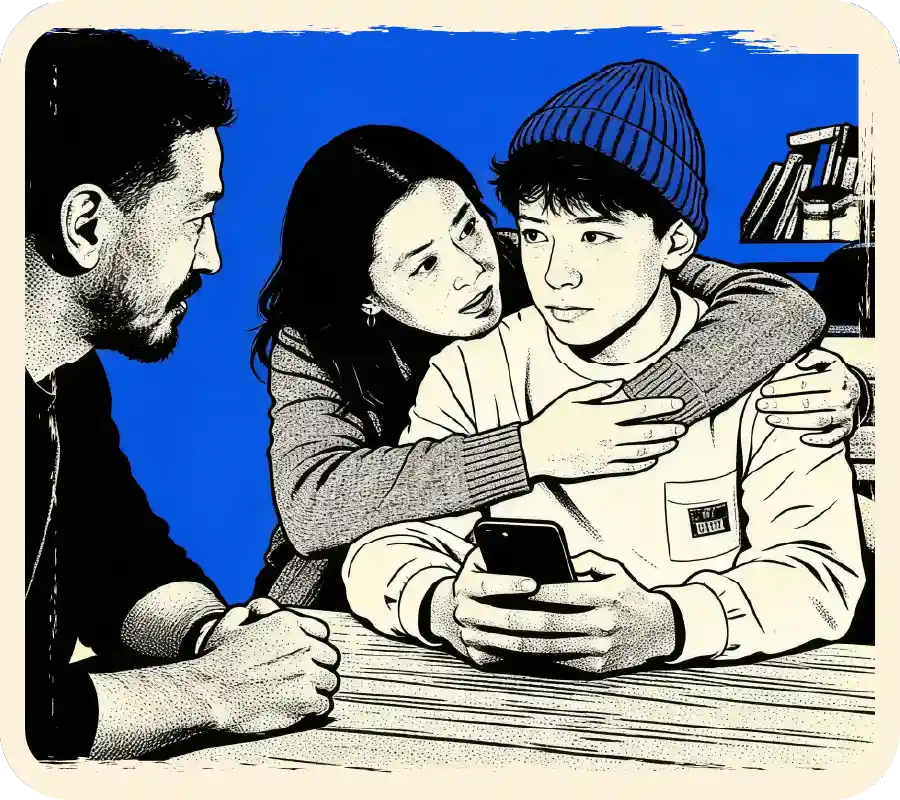

The current generation of young men is growing up in the midst of profound social transformation. Like previous generations, they have internalised during socialisation the belief that men may neglect social and emotional competencies and still claim a superior position within family, society and the workplace.They now encounter a world that is attempting to move beyond its patriarchal imprint and is no longer prepared to uphold this implicit “promise”.
In this context, masculinity is no longer simply revered but increasingly scrutinised, as adherence to dysfunctional masculinity norms has been shown to contribute to violence and to endanger physical and mental health. Not all young men respond to this transition by seeking new ways of being male that are fair and self-determined. A significant number react to uncertainty by holding on to patriarchal ideals of masculinity. Many experience themselves as betrayed and threatened in their self-worth and sense of manhood. Because they have learned that it is “unmanly” to confront painful feelings of shame, rejection or humiliation, they may struggle to seize the developmental opportunity this transition presents. Instead, some withdraw or cultivate resentment. Social media and gaming environments continuously supply narratives that intensify anger and facilitate masculinity-based radicalisation.
Competence in educational work with boys therefore requires a stance that is both encouraging and appropriately challenging.39 Boys’ work should communicate that the goal is not to be a “correct” man or to resemble every other man.40 Rather, it supports boys in identifying an individually suitable space in which they can learn to be “good enough” as boys and later as men. This includes continuously asking which developmental opportunities and forms of support are accessible to boys with fewer intellectual, social or emotional resources.
Educational work with boys must also address the fault lines created by shifting masculinity norms. What is new is not that masculinity expectations can be difficult to fulfil, but that they have become internally contradictory. For example, sexist remarks may be rewarded or considered necessary in some contexts and strongly condemned in others. Boys are confronted with double messages: they are expected to embody one set of traits and simultaneously its opposite. Such contradictions almost inevitably generate confusion and disorientation, even if not all boys experience this equally or at the same time.
Educational practice should also foster constructive ways of dealing with feelings of powerlessness and failure. Ideally, it can help transform experiences of failure into opportunities for growth and experiences of powerlessness into sources of insight and strength. To do so, it must offer more compelling alternatives than radicalisation or the promise of restored dominance. These alternatives may be demanding, but they should be developmentally meaningful rather than regressive.
