
Guidance for Parents and Professionals: Welcome to the www.manosphere.ch platform, an initiative of männer.ch

Act/

Prevent

Media literacy, violence prevention, gender equality and comprehensive sexuality education reduce the likelihood that boys are drawn into the manosphere. These competencies can be taught. However, they require resources and also challenge adults to engage with complex and sometimes uncomfortable questions.
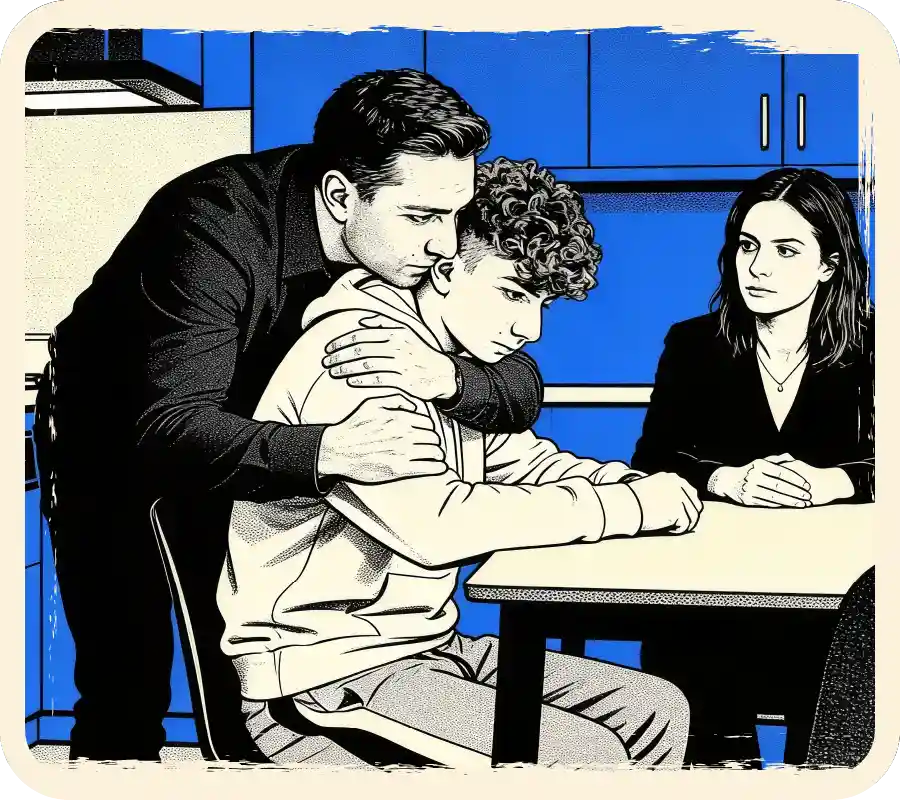
Trusting

Relationships

The virtual manosphere exerts a strong pull on many male adolescents. Research on which preventive measures work best for which groups and at which developmental stages remains limited. Protective factors may vary depending on individual motivation and available resources.

General protective factors include:

Core Gender Foundations:

Strengthening these protective factors and competences is a shared responsibility. Parents, professionals and other adult role models must work together with society, the economy and policymakers.

Reflecting on Masculinity

RECOMMENDABLE

MEDIA CONTENT

Harder Better Faster Stronger -

In this CBC documentary, misinformation expert Timothy Caulfield investigates the claims circulating within the manosphere, examining how fitness culture, men’s groups and online influencers shape contemporary masculinity narratives.

‘Manosphere’ Influencers Prey on the Insecurities of Young Men, Expert Says

A FRANCE 24 interview examining how manosphere influencers exploit young men’s insecurities and promote harmful narratives under the guise of self-improvement.

Rethinking Masculinity

In gender equality work, violence prevention and sexuality education, greater attention should be given to the preventive potential that lies in addressing both the problems boys create and the problems boys face. A purely deficit-oriented approach that focuses only on eliminating disruptive or aggressive behaviour, without offering constructive alternatives, is likely to remain limited in impact and may even prove counterproductive. Effective work with boys requires a balance between acknowledging risks and strengthening resources. It also requires gender reflection and sensitivity to socialisation processes. For many adolescent boys, belonging and recognition as a “real” man are existential concerns. Boys cannot simply be asked to abandon their existing masculinity ideals without being offered credible and attractive alternative ways of being male.36 In violence prevention, the goal is not to eliminate aggression entirely, but to address it constructively, reduce harmful expressions and promote a culture of respectful conflict.37 Aggression can be understood not only as destructive, but also as energy that can be channelled in protective and self-assertive ways. This includes developing controlled access to one’s own impulses, strengthening self-regulation, activating inner resources, and learning both to set boundaries and to respect them.38 Competencies for gender-reflective and resource-oriented work with boys are still not systematically embedded in many social and educational training programmes. Greater efforts are needed to integrate gender-reflective boys’ and men’s work into higher education and professional development. Gender reflection should become a standard element of institutional quality development and an integral part of educational, psychological and social support systems.